Six-skills are in demand in the post-pandemic workplaces, said Gwen Moran in her fast company article. Five of those six, self-direction, adaptability, empathy, communication skills, and motivational skills can be cultivated through a coach approach. Leading organizations are staying ahead by investing in coaching skills for their leaders. It will be a strategic advantage when the leaders could use coach-like conversation empowering their people.
ICF coaching’s core premise is that the client is whole, capable, creative, and resourceful. The coach’s job is to facilitate the client’s process so that the client can untangle their thoughts and get clarity to make progress towards a meaningful goal. Some common characteristics of coaching conversations are :
A trusted, judgment-free, safe place
A sounding board
Thought-provoking, powerful questions
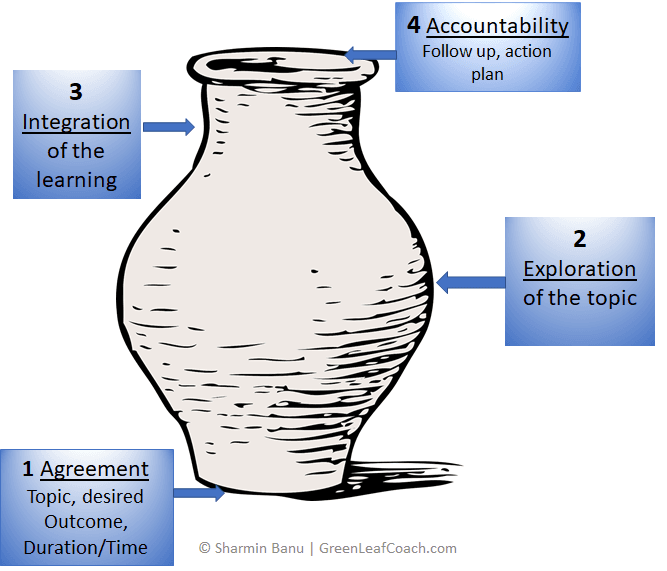
Fig 1: 4 Types of Coaching Questions
I have created this simple model for starters so that the leaders can get a sense of a coach-like approach and apply it in a 1:1 conversation with their teams.
4 Types of Coaching Questions*
A coaching session is a container where the creative, thought-provoking conversations happen. There are four types of questions a coach asks, usually in the following order.
Agreement -Topic, desired outcome, duration/time
Examples: What is the topic? What is the focus of the session? What is the desired outcome of this conversation?…
Exploration of the topic
Examples: What does the ideal outcome look like? Where are you now? What does help you to be your best? What is the gap? What else is possible? What if …?…
Integrate the learning
Examples: What have you learned so far? What is next? What are you taking away? …
Accountability -A time-bound action to follow through the learning.
Examples: What will you act on? By when? What is your timeframe?…
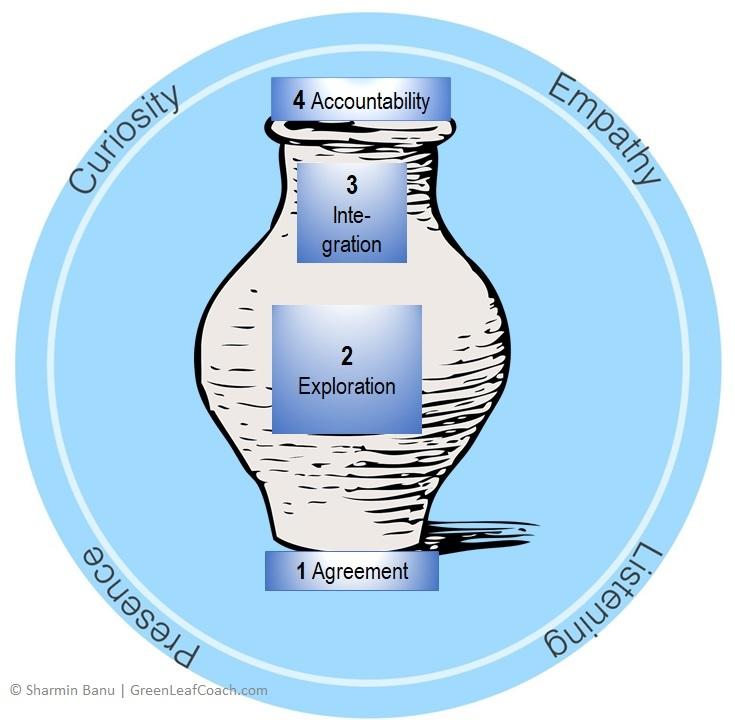
Fig 2: 4 Qualities of a Coaching Session
4 Qualities of a Coaching Session
If you have been in a coaching session, you may have noticed that the questions seem very natural, as if the coach was tracking your mind. How does that happen? To be attuned with the client, the coach has to bring themselves fully into the session. The qualities are:
1. Presence – Clear your mind, bring your focus to the person in front of you.
2. Listening – Listen to learn, hold off the urge to formulate your response.
3. Curiosity – Hold off judgment, tap into your curiosity.
4. Empathy – Remember a time you were in their shoes.
As I distilled my 11 years of understanding in this simple model, I hope that the leaders and managers use it in their 1:1 conversations to help the employees think for themselves and find their own answers. It doesn’t replace the need for mentoring/advice-giving, direct feedback, and other management responsibilities, though. Giving our judgment-free attention to someone, being curious on their behalf, is a gift. It takes practice, reflection, and feedback from a mentor coach, but in the end, the reward is priceless!
*This model was presented at the Learnapalooza Innovation Jam 2020 Conference on September 11th. The article was published here before.
Are you a leader in the High-tech? Are you a High Performing individual? Ready to take your career to the next level? Want to get in touch with your passion? I am an executive coach with a background in technology. Send me a note to claim your 30-min phone session free of charge.– Sharmin Banu, Executive coach for Tech Leaders
 Six-skills are in demand in the post-pandemic workplaces, said Gwen Moran in her fast company article. Five of those six, self-direction, adaptability, empathy, communication skills, and motivational skills can be cultivated through a coach approach. Leading organizations are staying ahead by investing in coaching skills for their leaders. It will be a strategic advantage when the leaders could use coach-like conversation empowering their people.
ICF coaching’s core premise is that the client is whole, capable, creative, and resourceful. The coach’s job is to facilitate the client’s process so that the client can untangle their thoughts and get clarity to make progress towards a meaningful goal. Some common characteristics of coaching conversations are :