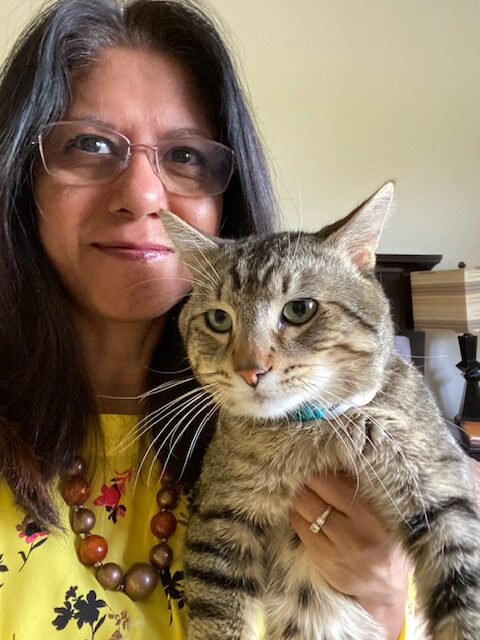
SharminBanu
My name is Sharmin Banu, I am a Career Advancement Coach. I live in Seattle WA with my husband and our daughter. I hold a CPC(Certified Professional Coach) and a BS and an MS in Computer Science. My clients achieved these results after coaching with me: Job promotion, desired career move, better understanding of corporate culture and expectations, more connection with their family and better work-life balance. To learn more visit my website: http://GreenLeafcoach.com or send me a mail to sbanu@GreenLeafcoach.com.
-
Conversations To Foster Greater Understanding
Recently this post by an organizational psychologist at Wharton, Adam Grant, went viral on LinkedIn. He said: The clearest sign of intellectual chemistry isn’t agreeing with someone. It’s enjoying your disagreements with them. Harmony is the pleasing arrangement of different tones, voices, or instruments, not the combination of identical sounds. Creative tension makes beautiful music. I commented there, which became most popular on that post (80+ likes and 20 comments). I would add, keeping the intention of understanding as the purpose, and not so much of agreement or disagreement. That way, it becomes less subjective. For example: instead of “I disagree,” one can say, “Can you give me an example where…
-
From Jerk to Genuine: How These High Performers Built Trust With Their Teams
Result and efficiency-driven high-performing individuals often have a blindspot when relating to others. It can create unintended harm to team morale and trust. Others tolerate such “jerk” behavior as subject matter expertise, and “get things done” competencies are valued more. It is not that they don’t get any feedback to correct their behavior, but rather the opposite. They don’t get timely and precise feedback. People want to understand the feedback before they can act on it. And when they do, they commit to it and eventually become more impactful. “I have been receiving this feedback for so many years. However, this is the first time I can understand it.” This…
-
Craft Your Vision Even When You Are Not A “Visionary”
As we grow in leadership roles, having a vision and communicating that to our teams becomes essential. Senior leaders often bring it to me as their challenge. Even though they already have a track record of delivering results, the executive level expects leaders to inspire through vision and alignment. Unfortunately, the new execs sometimes feel stuck on how else they would lead. In this article, I listed systematic ways to craft an inspiring vision. 1. Identify The Root Cause of Your Challenge Discomfort with Ambiguity If you tend to be more detail-oriented and not comfortable with ambiguity, visioning could be hard for you. Some have a misconception that a vision…
-
Life Lessons From Adopting A Pet
A few months after the pandemic started, we decided to get a kitten. Even though my daughter had been asking about it for a while, I was not looking forward to the additional responsibility. I was afraid of the mess the cat would create around the house. And it did. You can imagine the stress and the fights we had during those early days. Fast forward 18 months, and the mess is still happening occasionally, but fortunately, I no longer am stressed about it as I was before. What has changed? Over the past 18 months, we taught ourselves about taking care of a cat and its behavior; we experimented…
-
How To Think Of Your Career Growth, Agile or Waterfall?
Anyone familiar with software development knows agile is the way to go when developing new software or a product. But when it comes to a career, what does it mean? I didn’t think about it until that moment when I was in the middle of a coaching session with a senior technology leader of a Fortune 500 company. Let’s call him Peter. Peter was planning a transition, leaving his corporate VP job and starting doing something on his own in about a two-year timeframe. But he was getting frustrated that he didn’t know what it would be, and he couldn’t make any progress because he didn’t know “it.” It sounded…
-
Caterpillars to Butterflies : Human Maturity Stages
When I ask “What do YOU want” people sometimes get confused. Common responses are: “Wouldn’t that be selfish”? “I always think about others, I want others to be happy; am I not supposed to do that way”? Awareness of renowned development psychologist Robert Kegan’s Human Maturity Stages may help understand the dilemma. Kegan said humans go through several major stages of maturity in their lifetime. And not everyone reaches all of them in their lifetime. Ego Centric Self (Stage 0-2) This is typically the stage from birth to adolescence. At this stage, the earth revolves around them. Others are there to fulfill their needs. They hardly have the capacity to feel…
-
You Were Asked To Be More Strategic, Now What?
Engineering and STEM Leaders often receive this feedback, “you need to be more strategic,” when they are passed up for a promotion. Yet, they have minimal idea of what that would look like for their context. I shed some light on what it means to be strategic and improve our strategic thinking while staying true to our authentic selves. What Does Strategy Mean This article, Strategy versus tactics: the difference is execution, defined it as A strategy is your overarching plan for achieving your goals, but it doesn’t get bogged down in specifics. You can think of this as your compass, guiding your organization toward your objective. On the other…
-
“Never Looked Back” – Is a Myth
Recently I was sharing the story of my career change and someone commented, “…and you never looked back”! I was caught by surprise. The fact is, I did look back, many times. The past 10 years of my new career was anything but easy and many times I doubted and regretted my original decision. That comment invoked a deeper insight in me though. “I never looked back”, gives us the impression that the person found their ultimate path and everything became better afterward. It is like those “lived happily ever after” fairy tales. This is far from reality and I am yet to meet someone with significant successes, who never…
-
Feeling – A Vital Missing Part from the Thinker’s Head
“What do you feel now?” I ask my client Tom in the middle of our session. “I think it is, …”, he replies. “What do you feel”, I ask persistently. “Well, I think it could be …”; little baffled, Tom reiterates his thoughts. In Tom’s mind “feeling” is a synonym of “thinking”, he(who is an engineer) lives and breathes in his head, the rest of the body underneath merely serves as a pedestal for his head! Tom is not alone. When I first came for my coach training I had a hard time with these “feeling’ questions. I didn’t know much about it other than, feeling good or bad. Then…
-
Why Targeting A Job Title As A Goal Doesn’t Work – Sharmin’s Interview With Ascend Global Media
Q: Why is it important to set an authentic goal? When we are too focused on outside-in recognition like a job title, money, etc., we narrowly define our goal. It will be very hard to keep our attention to what is truly important, and we may get easily distracted by the hurdles. As a result, we may act and behave less than our best, which leads to unproductive drama, a win-lose kind of game. When setting a goal, think about the behavior and experiences that lead to a desirable outcome. Often people say, “I want to be a VP, Director, CEO, etc.”. I understand those titles show your level…